
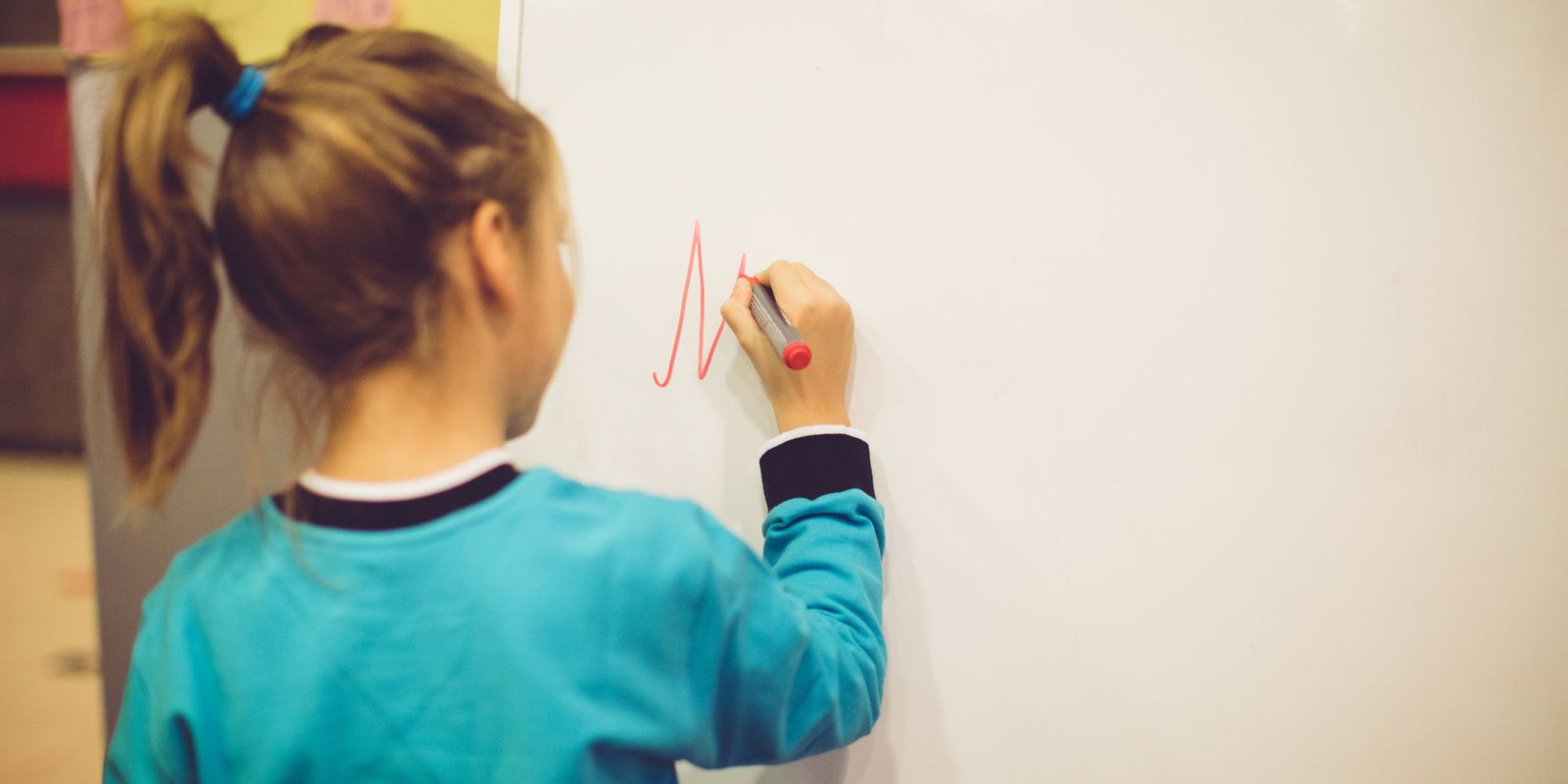
In today’s digital era, many might assume that world-class universities like Harvard, MIT, or Oxford have completely abandoned traditional teaching methods. We often imagine their classrooms filled with interactive touchscreens, digital boards, and futuristic technologies that make learning effortless. Yet in reality, many professors at these prestigious institutions still teach using chalk and blackboards.
Why do they choose what seems to be an “old-fashioned” method, even though they have access to the most advanced technology in the world? The answer lies not in financial capability, but in learning effectiveness.
Technology indeed makes many things faster. But when it comes to learning, speed can actually become the enemy. The human brain is not designed to absorb information rapidly without pauses. When a lecturer writes slowly on the board, students have time to think, process, and take notes at a rhythm that matches their cognitive pace.
According to Girmo Hail, a professor at Harvard, writing on the blackboard creates a “natural rhythm for pausing, thinking, and absorbing information.” In other words, blackboards help prevent students from being “flooded with information”, which often happens when digital slides are presented too quickly.
This is where the strength of blackboards lies. Instead of delivering all the material at once, they force the learning process to happen step by step — something essential for understanding complex concepts such as mathematics, physics, or economics.
The blackboard is not just a writing tool but also a visual thinking tool. When professors draw diagrams, formulas, or concept maps on the board, they are not merely presenting information — they are building the thought process gradually alongside their students.
This process helps students see how an idea develops. For instance, in a physics class, the lecturer starts from a basic law and then derives equations step by step until reaching the conclusion. Students follow this logical flow gradually, rather than just seeing the final result.
This method is far more effective than simply showing a completed PowerPoint slide. On a blackboard, every line and every word is part of a thinking narrative, not just a visual display.
Another advantage of the blackboard is its reliability. It does not depend on electricity, internet signals, or specific software. It can be used in any classroom — from elite university halls to simple rural schools.
Unlike digital screens that can malfunction, require software updates, or face technical issues, a blackboard is always ready to use. It is a simple yet powerful tool, especially in educational environments that lack full infrastructure.
Thus, the blackboard becomes the most inclusive tool — accessible to anyone, anywhere, at a very low cost. On a global scale, this makes it an efficient and sustainable educational solution.
From an educational economics perspective, the blackboard is also a cost–benefit efficient choice. At universities like MIT, instructors realize that investing in high-end classroom technology does not necessarily lead to significantly better learning outcomes.
A blackboard only requires chalk and an eraser. It’s inexpensive, easy to maintain, and has an enormous impact on learning. With such minimal cost, the results can be remarkable — especially in the hands of skilled and experienced teachers.
As one MIT professor put it, education is not about the tools or gadgets used, but about the way of thinking and delivering knowledge. The blackboard stands as a simple symbol of that principle.
Technological advancement certainly brings many benefits to education. However, educators at top universities understand that technology is merely a learning aid, not the ultimate goal.
They use technology when it truly serves the learning purpose — for instance, in data simulations, virtual experiments, or online discussions. But in face-to-face classes, particularly when building conceptual understanding, they still prefer the blackboard.
The key lies in aligning tools with learning objectives. If high-tech tools distract attention or make learning too fast-paced, then the blackboard remains the more effective option.

Technology can be sophisticated, but teachers are still the heart of learning. As Edward F. Shrous, a professor at Princeton University, once said: “What we really need are smart teachers, not smart boards.”
This means that what education needs most is not smart boards, but smart teachers — those who know when to use modern tools, when to return to classical methods, and how to enliven the classroom through human interaction.
A competent teacher can turn a simple blackboard into an extraordinary learning instrument. Conversely, without competent teachers, even the most advanced technology will mean little.
Beyond being a mere tool, the blackboard represents the true philosophy of education: simple, reflective, and centered on the process of thinking.
Behind every stroke of chalk lies a mental process: the lecturer thinks, writes, pauses, explains, and builds meaning together with the students. This creates a learning space that is alive, human, and interactive.
Meanwhile, education that relies too heavily on screens and digital devices tends to make learning passive — students watch instead of think. Yet, the essence of real education is to train the mind to think, not merely to memorize information.
When we see a Harvard or MIT professor still writing with chalk on a blackboard, we are not witnessing technological backwardness — we are witnessing wisdom in teaching. They understand that learning is not about the newest tools but about the most effective ways to foster understanding.
True education is not a technology race. It is the art of igniting minds and curiosity. And sometimes, a single piece of white chalk in a teacher’s hand can be far more powerful than a high-resolution digital screen.
The blackboard proves that in an increasingly modern world, simplicity can still remain relevant — even superior — as long as it serves the right purpose: to build understanding, not to showcase progress.
Leave a Reply