
In a world that is rapidly changing, a child’s success in the future no longer depends solely on academic ability. High grades are important, but they are not enough to ensure a child’s readiness to face real-life challenges. This is where life skills play a crucial role. Life skills are essential tools that help children adapt, think critically, manage emotions, and make wise decisions. Through the teaching of life skills in school environments, children can grow into individuals who are independent, resilient, moral, disciplined, and responsible.
Life skills can simply be understood as the ability to face daily life challenges in an effective and positive way. These skills cover social, emotional, moral, and practical aspects that children need to manage themselves. When children are equipped with life skills from an early age, they learn not only what to do, but also why it is important and how to do it correctly. This helps them become not just intellectually smart, but also emotionally and socially mature.
Independence is one of the main pillars of life skills education. Children need to be accustomed to managing themselves — from simple routines like preparing their school supplies, completing assignments without being told, to managing their time and emotions. Independent children grow to be confident and able to make decisions without depending on others. On the other hand, social and communication skills are equally important. Children should learn how to express their opinions politely, listen to others, work collaboratively, and resolve conflicts peacefully. These interpersonal abilities will later become valuable assets as they step into the wider world.
Moreover, the modern world demands critical thinking and problem-solving abilities. Through active and engaging learning experiences at school, children can be trained to assess information objectively, analyze situations, and find solutions to various problems. These skills help them avoid giving up easily when facing difficulties. At the same time, empathy and moral values must be instilled early on. Children need to learn to understand others’ feelings, respect differences, and develop a sense of responsibility toward others. Moral values serve as a compass that guides them to do what is right, even when no one is watching.
Discipline and responsibility are also vital components of life skills. By encouraging children to follow rules, complete tasks on time, and accept the consequences of their actions, schools help them build strong and consistent character. Likewise, creativity and perseverance foster the courage to try new things and recover from failure. Children who are used to thinking creatively can innovate, while those with perseverance will not easily give up when faced with obstacles. In today’s digital era, digital and financial literacy also need to be introduced early. Children should be taught to use technology wisely, protect their privacy, and understand basic money management concepts such as saving and distinguishing between needs and wants.
Teaching life skills offers many long-term benefits. Children trained in life skills are better prepared for an ever-changing world. They grow into confident individuals who can adapt and take control of their lives. Furthermore, the moral values embedded in life skills help shape good character, honesty, and empathy. In the long run, these skills also support academic and career success, as children with strong social and emotional abilities are generally better at collaborating, managing pressure, and solving problems. Beyond that, life skills education helps shape a generation of individuals with integrity — people who will grow into responsible and compassionate members of society.

Schools play a central role in instilling life skills in children. Teaching life skills does not need to be a separate subject; it can be integrated into every learning activity. For instance, in language classes, students can learn effective communication; in science, they can practice teamwork; and in religious education, they can nurture moral and spiritual values. Beyond classroom learning, schools can also foster life skills through real-world projects such as creating a school garden, managing a small bazaar, or organizing social activities. Through these hands-on experiences, children learn teamwork, responsibility, and take pride in their efforts.
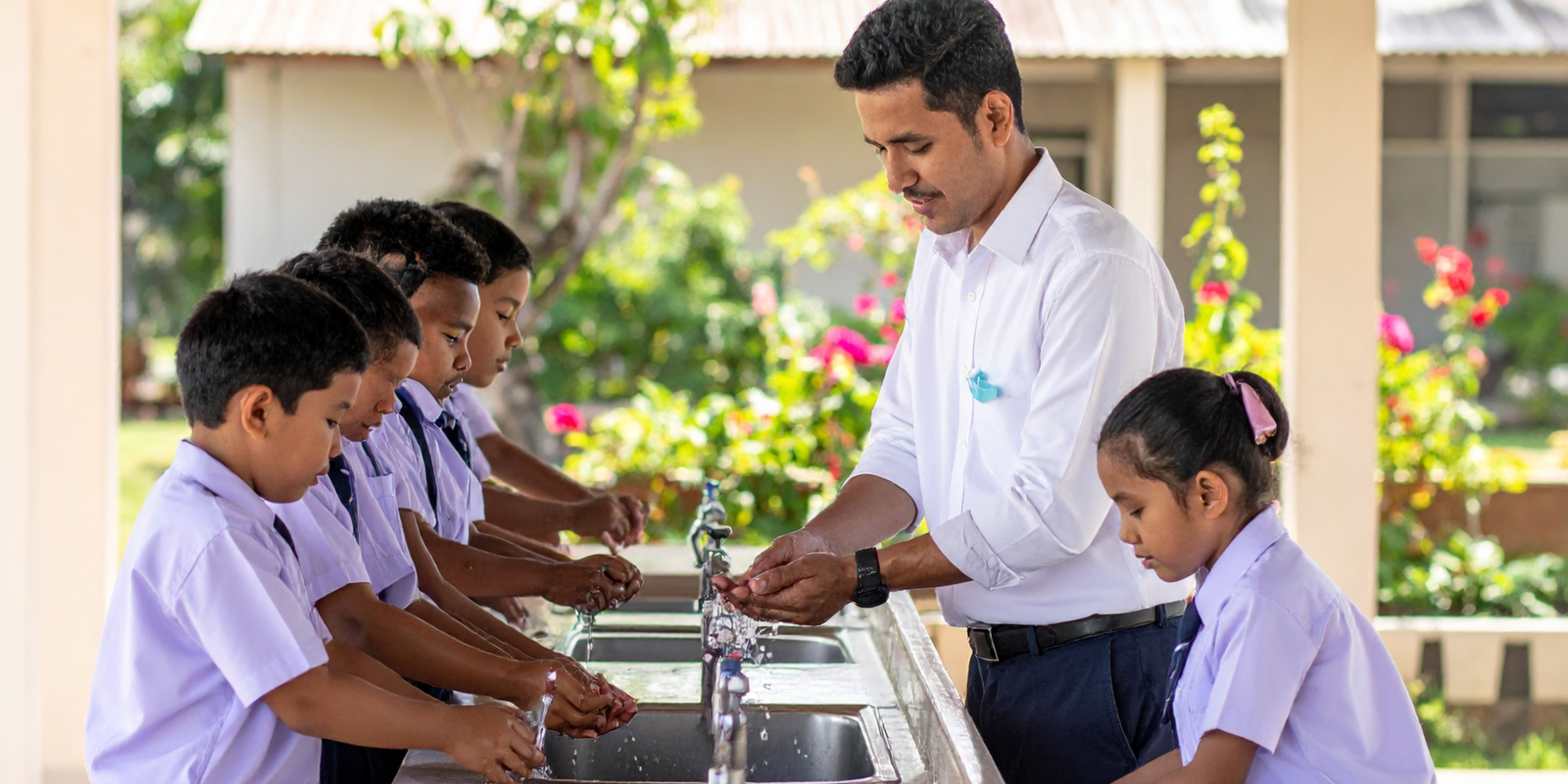
Extracurricular activities are also an important avenue for developing life skills. Programs such as scouting, student councils, social service projects, and environmental initiatives provide opportunities for children to learn leadership, discipline, and empathy. Likewise, simple daily routines at school — maintaining classroom cleanliness, queuing properly, or organizing duty schedules — serve as practical exercises in building responsibility and self-discipline. All of these activities become more meaningful when schools and parents work hand in hand. Teachers can give parents feedback on how to reinforce life skills at home, while parents can support consistent values within the family environment.
Throughout the process, teachers’ role modeling is a highly influential factor. Children learn more from examples than from advice. Teachers who demonstrate discipline, honesty, politeness, and compassion become real-life role models for their students. A positive, safe, and supportive school environment also plays a vital role in fostering children’s confidence and enthusiasm for learning. When children feel respected and heard, they are more likely to internalize the positive values being taught.
Ultimately, teaching life skills in schools is not merely about preparing children to pass exams — it is about preparing them for life. Schools and teachers hold a strategic role as partners to parents in shaping children who are not only intelligent but also possess strong character and kind hearts. By instilling life skills from an early age — such as independence, responsibility, empathy, and discipline — we are helping them build a brighter future. The true measure of a child’s success is not found in exam scores alone, but in their ability to face life with wisdom, integrity, and compassion.
Leave a Reply