
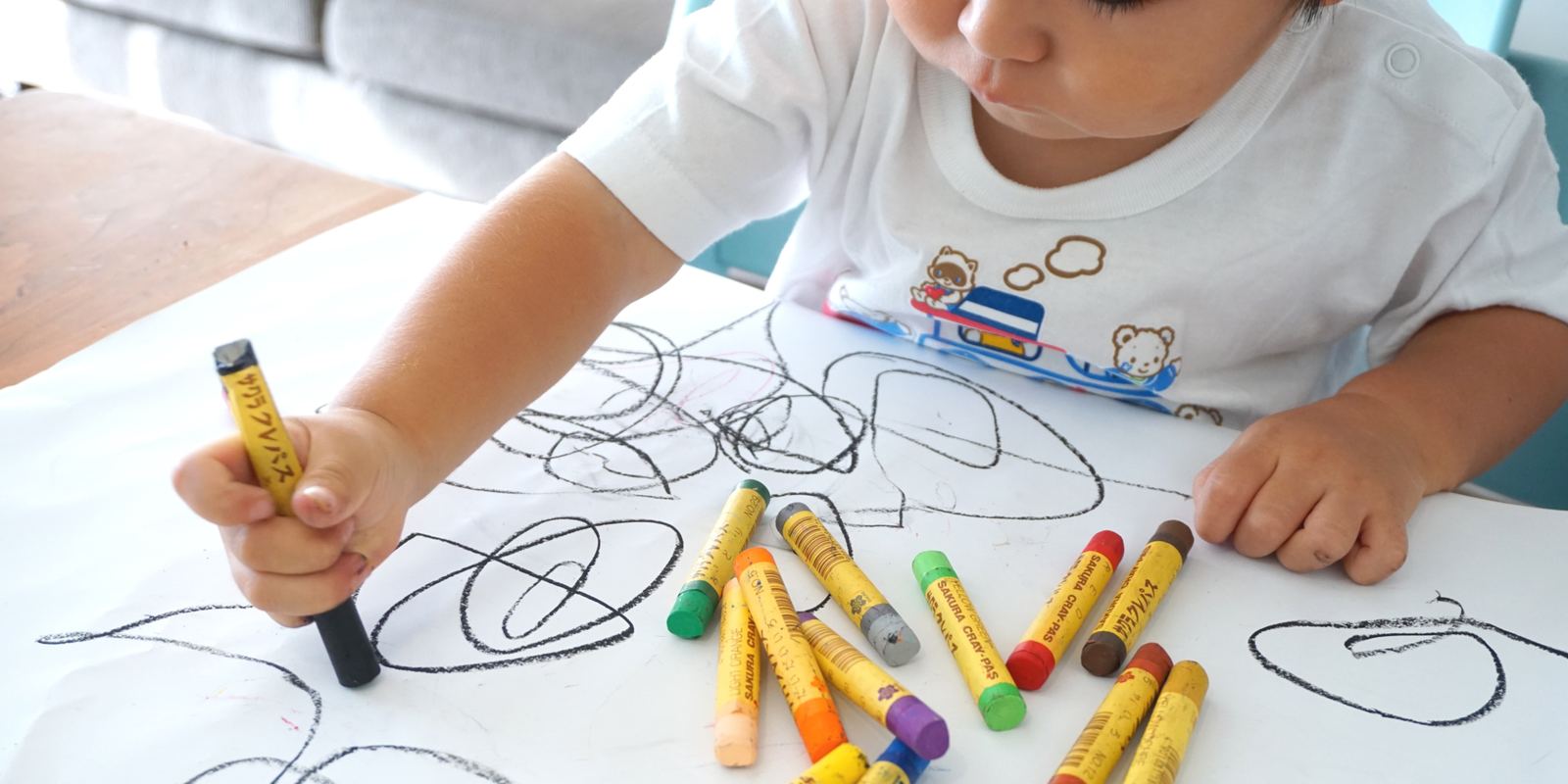
In education, we often focus on reading and writing as the two main pillars of learning. However, there is another strategy that is often seen as merely a creative activity, even though it has a powerful impact on memory: drawing. Recent research shows that drawing is not just an artistic activity, but a highly effective learning tool that helps students understand and retain information more effectively.
A study conducted in 2018 revealed that drawing can significantly improve memory compared to simply reading or writing. This happens because when someone draws, they are not only processing information visually, but also kinesthetically and semantically. In other words, the brain is working through multiple pathways at once. This activity creates a richer and deeper learning experience than conventional methods.
In an early experiment in the UK, researchers asked university students to study a list of common words such as “truck” and “pear.” Afterward, they were asked to either write the words down or draw them. The results were striking. Participants who only wrote the words were able to recall about 20 percent of them. In contrast, those who drew the words were able to remember up to 45 percent—more than twice as much.
These findings were not a coincidence. In follow-up experiments, researchers compared the effectiveness of traditional note-taking with drawing concepts. When students were asked to draw scientific concepts such as isotopes and spores, the results showed that they could remember nearly twice as much compared to when they simply wrote down the definitions. Interestingly, this benefit did not depend on a person’s artistic ability. This means that even students who feel they “can’t draw” still gain the same advantages.
So, why is drawing so effective? The answer lies in how the brain processes information. Drawing forces a person to elaborate on the meaning of a concept. When students draw, they must first understand the information, then translate it into a visual form. This process involves deeper thinking, rather than simple memorization.
In addition, drawing involves motor activity—the movement of the hand while creating the image. This activity strengthens memory traces because the brain links information with physical actions. Not only that, students also review their own drawings, reinforcing visual processing. The combination of thinking, moving, and seeing is what makes information easier to remember.
Unlike listening to a lecture or passively viewing images, drawing is an active process. Students do not just receive information—they interact with it. They must “grapple” with the material, reorganizing it into a form that makes sense to them. This process makes learning more meaningful.
From a neurological perspective, the strength of memory depends heavily on the number of connections formed in the brain. Information that stands alone, without links to other knowledge, tends to be quickly forgotten. On the other hand, the more connections that are formed, the stronger the memory becomes. Drawing helps create these connections because it engages multiple aspects of processing at once.
For example, when a student draws the concept of a “food chain,” they are not just remembering its definition. They are also visualizing relationships between living organisms, understanding the flow of energy, and possibly connecting it to real-life experiences. All of this creates a more complex and durable memory network.
In classroom practice, this strategy can be applied in many simple ways. Teachers do not always need to provide ready-made posters or diagrams. Instead, students can be asked to create their own visual representations of the material they are learning. The act of creating is the key to learning.
Rather than asking students to take notes verbatim, teachers can encourage them to divide their notebook pages into two sections: one for writing, and another for drawings, diagrams, or charts. This approach not only makes notes more engaging, but also more effective for memory.
Furthermore, students can be encouraged to collect, analyze, and present data in visual forms. In mathematics, for example, they can draw fractions or patterns. In language learning, they can visualize storylines. Even in science, abstract concepts can be turned into simple drawings that are easier to understand.
Some schools have implemented this approach with encouraging results. Some students create their own books to visually represent learning topics. Others make travel journals as a form of learning documentation. At a higher level, students create “one-pagers,” which are single-page summaries that combine text and images to demonstrate their understanding of a topic.
This approach also brings other important benefits. Drawing encourages creativity and a sense of ownership over learning. Students are no longer just searching for the “right” answer, but also expressing their understanding in unique ways. This can increase motivation and engagement in learning.
Amid the challenges of modern education, where students often feel bored and pressured, simple strategies like drawing can be highly effective solutions. This activity does not require advanced technology or high costs, yet it has a significant impact on the quality of learning.
However, it is important to understand that the main goal of drawing in this context is not to produce beautiful artwork. The focus is on the thinking process and understanding. Therefore, teachers and parents need to create a supportive environment where students feel free to draw without fear of making mistakes.
In the end, drawing serves as a bridge between information and understanding. It helps students not only remember what they learn, but also grasp its meaning more deeply. By engaging multiple senses and cognitive processes, drawing transforms learning from a passive activity into an active and meaningful experience.
If the goal of education is to help students learn effectively and retain knowledge over time, then it is time to give more space to this strategy. Sometimes, the best way to remember something is not by writing it over and over again—but by drawing it.
Leave a Reply